


First Online Talk from the SIA Bridges & Infrastructure SIG
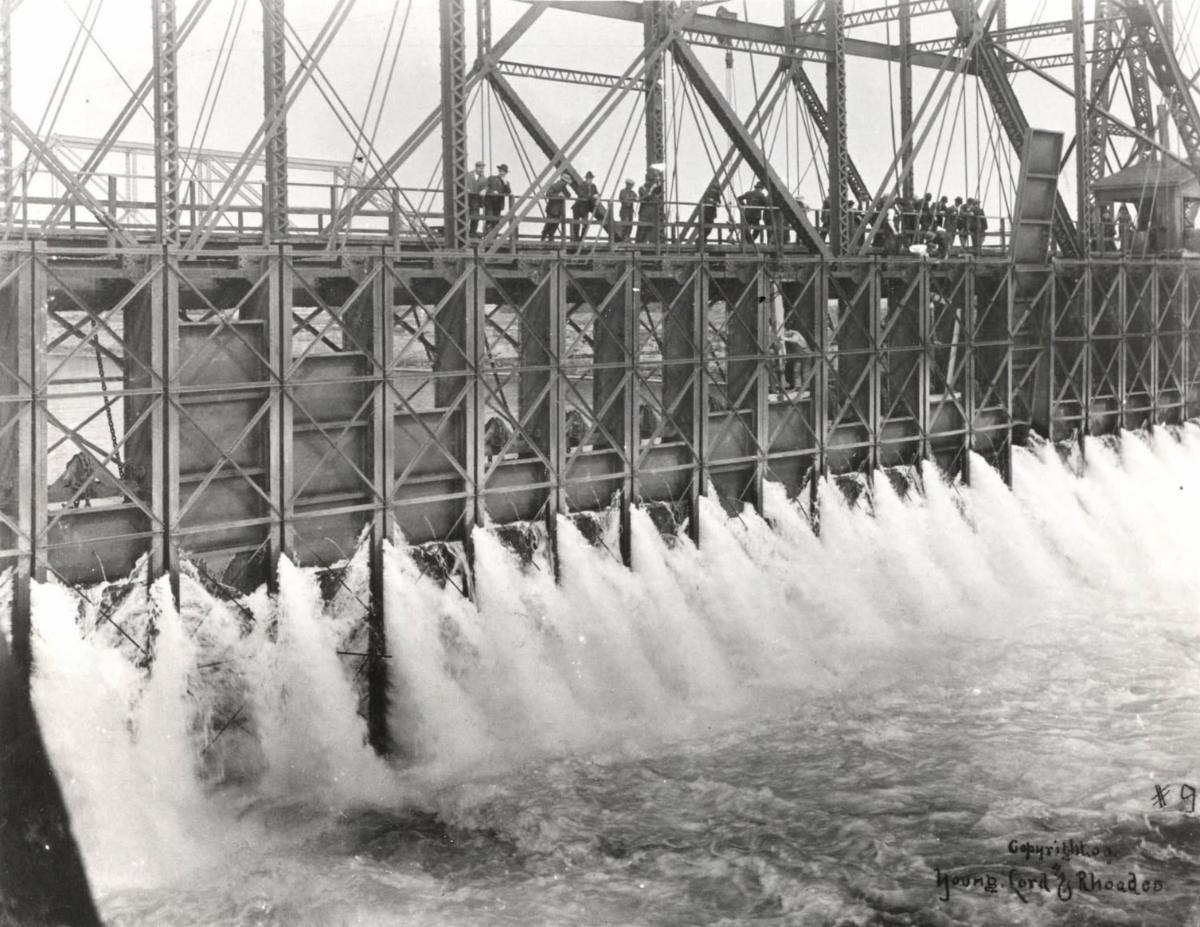
Matthieu Paradis – “Last Ship to First: Technology and Infrastructures at the ‘Soo’ Ship Canal”
Thursday, December 10, 2026
5 p.m. Eastern (US & Canada)
Please join us for the very first talk from the Bridge & Infrastructure SIG, a new special interest group of the Society for Industrial Archeology.
The talk is scheduled for Thursday, December 10, 2026 at 5pm Eastern.
The Bridge & Infrastructure SIG (aka BIGsig) is a new special interest group (SIG) of the Society for Industrial Archeology. Our activities will begin with an online talk on bridges, infrastructure, and canals once a quarter. Our regular talks are free and open to anyone interested in bridges, infrastructure and canals. We expect that the pace will pick up as more people join BIGsig and volunteer to help make good things happen.
For more information about the Society for Industrial Archeology go to our home page at https://www.sia-web.org.
Topic: Last to First: Technology and Infrastructures at the “Soo” Ship Canal
As the Wisconsin Glacier retreated some 12,000 years ago, the St. Marys River ultimately carried Lake Superior waters east to Lake Huron, leaving a six-metre difference between the two lakes. Called Baawaating – Place of the rapids – in Anishinaabemowin, the St. Marys River rapids and its plentiful resources attracted Indigenous peoples from around the Great Lakes and beyond for millennia. As Europeans began exploring the rich fur lands of the Lake Superior area in the 17th century, they were hampered by the fierce rapids at Sault Ste. In the late 18th and early 19th century, a rigolet was constructed for the passage of bateaux, facilitating the transfer of goods between Lake Huron and Superior.
From the 1840’s to the late 1880’s, several proposals were put forward for the construction of a larger canal. Built between 1889 and 1895, the Sault Ste. Marie Canal provided the last link in an all-Canadian navigational chain from the Atlantic Ocean to Lake Superior or the Great Lakes St. Lawrence shipping route.
The talk will look at the many advanced features and “firsts” of waterway engineering technology. Indeed, at the time of opening, the Sault Ste. Marie Canal was the world’s longest lock and the one of the first one to operate using electricity. From lock technology to the Powerhouse and the Emergency Swing Dam, let take a dive through the Sault Ste. Marie Canal’s landscape and major infrastructures.
Speaker: Matthieu Paradis
Matthieu Paradis is currently a Cultural Resources Management (CRM) Advisor with the Parks Canada Agency, where he has worked since 2001. He holds a bachelor’s and a master’s degree in history from the Université de Montréal, and he’s enrolled in the Graduate Diploma in Heritage Resources Management from Athabasca University. He has more than 25 years of experience in the conservation, management and presentation of cultural heritage as he held various positions related to historical interpretation and management of national historic sites in the Greater Montreal area.
He has been contributing to many projects involving all aspects of cultural heritage across Canada, with a particular interest in the industrial heritage associated with Parks Canada’s historic canals in Quebec and in Northern Ontario. The research projects and publications to which he has contributed, often in collaboration with colleagues, have focused on the social, economic, industrial, and military dimensions of Canadian and Northeastern American history.
Zoom Call Details
We use Zoom for our online talks. To attend this talk click on this link:
Join Zoom Meeting
https://zoom.us/j/94632598052?
Meeting ID: 946 3259 8052
Passcode: 588848
One tap mobile
+16699006833,,94632598052#,,,,
+17193594580,,94632598052#,,,,
Next scheduled talk:
The next talk on bridges, infrastructure and canals will happen in Feb 2027. Our speaker will be Bill Kelley, archivist for the California Department of Water Resources’ Photography Unit. He will be talking about the history of the California State Water Project (SWP) and the Central Valley Project (CVP) and show us a few of the two million images which they have captured since the 1950s.
Additional talks will be scheduled soon. We’re always looking for suggestions for speakers and topics on bridges, infrastructure and canals. Send your suggestions to BIgSIG@siahq.org.